SEKCIJE
Festival sections
- Images of Non-belonging: The Cinematic World of Paweł Pawlikowski
When Paweł Pawlikowski arrived in the UK at the age of fourteen, he initially thought he and his mother had come on holiday. That changed on his first day at school, when he became the ‘Other’ – a Pole, an Eastern European, an immigrant who did not speak the language of his peers. From then on, his life was marked by dislocation and a lack of any real anchor. He completed his secondary education in West Germany, studied literature and philosophy at Oxford, and then travelled the world as a documentary filmmaker, capturing glimpses of real people’s lives, political regimes and the stories that unfolded around them.
At the turn of the millennium, he turned to feature filmmaking with Last Resort (2000), revisiting his own youthful experience of being thrust into an unfamiliar world – one shaped by the collision between East and West, personal distress and the impersonal machinery of British bureaucracy. The film also explores the hope of a new life set against the bleak reality of being trapped in limbo while awaiting asylum. All the more relevant in today’s post-Brexit context, it portrays life on the margins of society with a documentarian’s immediacy.
Although its visual style, characterised by close-ups and an unsteady handheld camera, now stands in stark contrast to the carefully composed, stylised images of his later works, Last Resort already anticipates themes that would become constants in Pawlikowski’s oeuvre: the experience of foreignness, the search for identity and entrapment in the social and political circumstances that shape our lives.
His next feature film, My Summer of Love (2004), similarly explores the tension between the desire to escape and the inability to break free from one’s social milieu. Set in the English countryside, the film centres on the friendship between two girls from diametrically opposed class backgrounds, brought together by the boredom of summer and a shared desire for escapism. They seek refuge in fantastical realities, acting out different versions of themselves. But this imagined world soon becomes a realm of manipulation and destruction, shaped by an imbalance of power. Ultimately, the class divide continues to define the girls, even within the world they seek to reinvent.
A further formal shift in the director’s oeuvre comes with his return to the country and language of his childhood. In Ida (2013), the first feature film he shot in Poland, Pawlikowski explores an entirely different cinematic language: colour and a wide panoramic aspect ratio give way to black-and-white photography and a square 4:3 frame, while a moving camera is replaced by static shots in which empty space often yawns around the characters, visually underscoring the protagonist’s erased and unknown family history.
Here, too, identity remains the central thematic thread, though it is no longer merely personal but inextricably linked to the family’s past and to broader European history. As Ida’s origins are gradually uncovered, questions of historical memory and guilt come to the fore, forcing her to reconsider her faith, her freedom and the choices that will shape her future.
However, the director’s most personal film is Cold War (2018), inspired by the turbulent love story of his parents, who met in 1949 amid the ruins of post-war Poland. We follow their tumultuous romance from Poland to East Berlin, Yugoslavia and Paris, while the black-and-white cinematography and 4:3 aspect ratio – which in Ida conveyed torpor and restraint – now complement the narrative’s dynamic rhythm, infused with music and dance. And yet, despite constant movement between countries and attempts to escape social and political constraints, freedom remains elusive here too. This time, however, the themes of alterity and the inability to belong extend to post-war Europe as a whole.
Veronika Zakonjšek
- Ivica Matić: Down-to-earth, Human and Witty (copy)
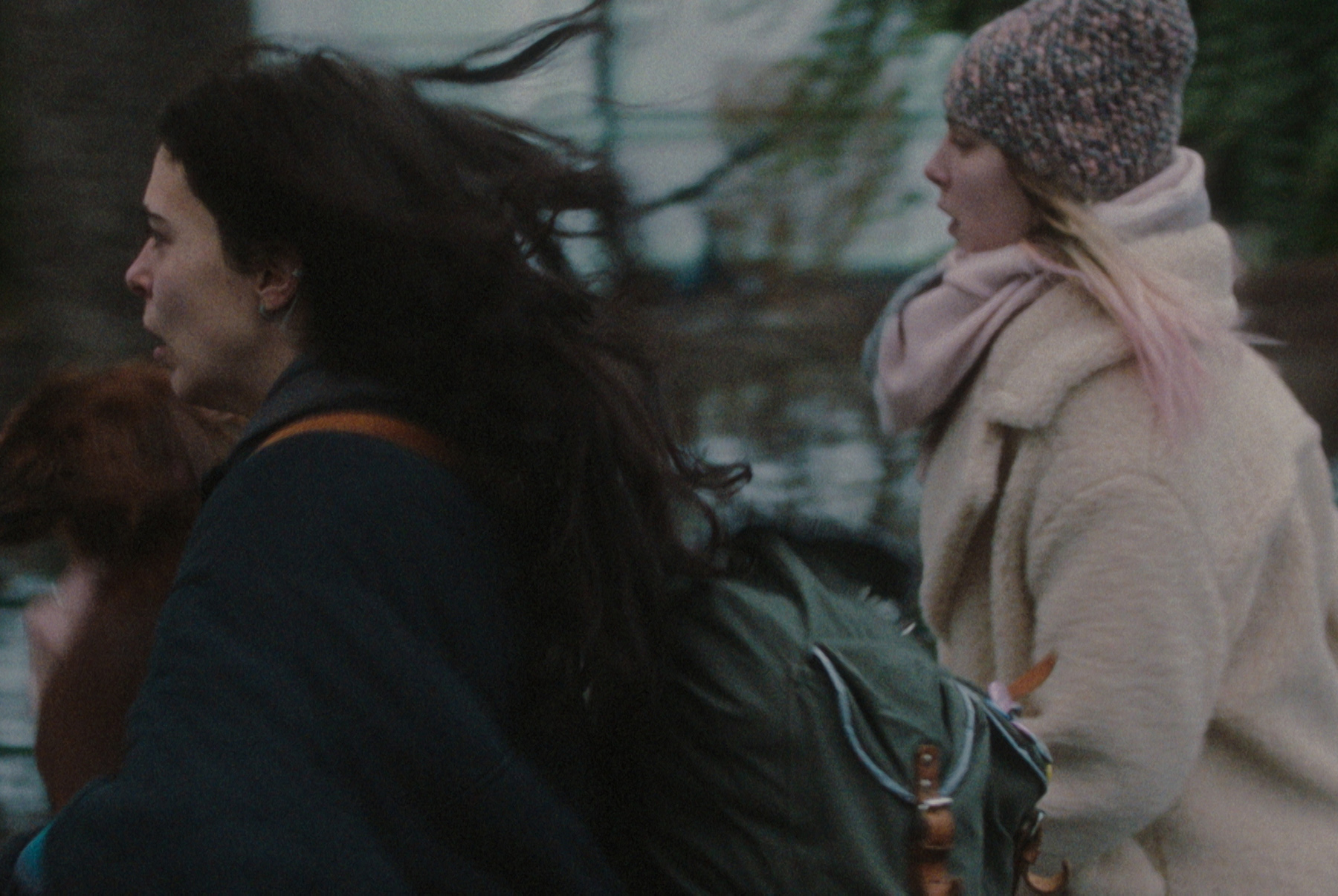


Vodomec (Kingfisher)
nagrada režiserju najboljšega
filma iz Perspektiv po izbiri
mednarodne žirije; podeljuje glavni
pokrovitelj Telekom Slovenije d. d
Nagrada občinstva zmaj
najbolje ocenjenemu filmu
Nagrada FIPRESCI
mednarodna žirija svetovnega
združenja filmskih kritikov in
novinarjev
Nagrada za najboljši kratki film
nagrada režiserju najboljšega
filma iz Perspektiv po izbiri
mednarodne žirije; podeljuje glavni
pokrovitelj Telekom Slovenije d. d
Nagrada mladinske žirije Kinotrip
nagrada režiserju najboljšega
filma iz Perspektiv po izbiri
mednarodne žirije; podeljuje glavni
pokrovitelj Telekom Slovenije d. d
Nagrada Art kino mreže Slovenije
nagrada režiserju najboljšega
filma iz Perspektiv po izbiri
mednarodne žirije; podeljuje glavni
pokrovitelj Telekom Slovenije d. d

37th Liffe Ljubljana
International Film Festival


@ 2026 Liffe. Vse pravice pridržane.
Festival
Sponsors and partners